







Note: The following e-newsletter was sent to Sen. Leonard Christian’s subscribers Jan. 23, 2026. To subscribe to Sen. Christian’s e-newsletters, click here.
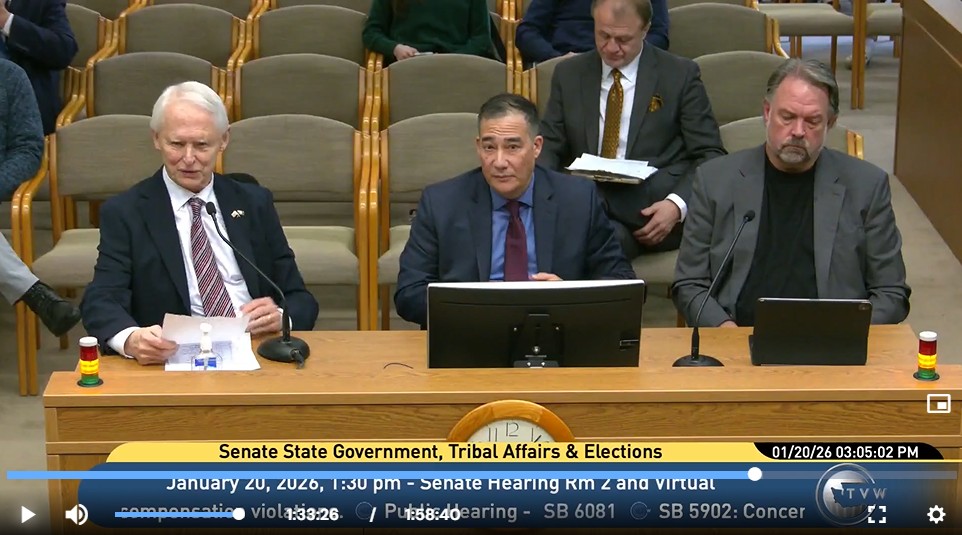
At a Senate hearing Tuesday, current and former state elections officials testified in opposition to this year’s proposal to hobble initiative campaigns. From left, former Secretary of State Sam Reed, current Secretary of State Steve Hobbs and initiative backer Brian Heywood. To see video, click here.
Dear Friends and Neighbors,
Since 1912, the initiative process has been an important safety valve for the people of Washington state. Our state constitution calls it “the first power reserved by the people.” And we have used it hundreds of times, for issues large and small, everything from allowing the sale of colored oleomargarine to banning racial discrimination in state contracts and college admissions.
Initiatives give us a chance to pass the bills the Legislature won’t and rein in state government when it goes too far. But here’s the sad thing. Some people have a problem with that.
On Friday, the Senate State Government, Tribal Affairs and Elections Committee passed Senate Bill 5973, which would make it so difficult and expensive to run initiative campaigns that they might need to be listed as an endangered species. An identical measure is advancing in the House, House Bill 2259. These bills are the latest in a long-running effort by my majority colleagues to hobble the initiative process in the name of “good government.”
This year’s version of what we call the “Initiative Killer” bill would:
- Prohibit canvassers from being paid by the signature – the most practical way of gathering the 308,911 signatures it takes to place a measure on the ballot or before the Legislature.
- Require campaigns to turn in 1,000 signatures when an initiative is filed, before a ballot title is issued and before a full signature drive can commence – adding needless delays to the process.
- Allow third parties to sue initiative campaigns – potentially tying them up in court and reducing the amount of time available to gather signatures.
The arguments for this bill are nonsense. This bill won’t reduce signature-gathering fraud in this state because we don’t have a problem in the first place. There have been only a handful of cases since paid signature gathering became the norm in the 1990s, all were detected by state elections officials or the campaigns themselves, and none have been reported in the last 13 years. When it comes to turning in valid voter signatures, paid signature gathering firms actually have a 33 percent better track record than volunteers — their contracts depend on it, because no one wants to pay for bad signatures.
The people versus the powerful
State elections officials say it’s hard enough already to qualify an initiative, and further obstacles will only hinder the people’s rights. In testimony this week, former Secretary of State Sam Reed described the measure as “a voter suppression bill.” A whopping 10,520 people signed in to the Legislature’s website to express their opposition.
Majority Democrats are pressing forward nevertheless. After eight years of entrenched one-party control of the Legislature, they have the most to lose when the people speak. They certainly learned that lesson in 2024 when the people forwarded six measures to undo their “progressive” agenda. That appears to be the only problem their bill would solve. My side will fight this bill with everything we’ve got when it comes to the Senate floor. We are proud to stand by the old-fashioned notion that government is here to serve the people, and not the other way around.
Go Zags!
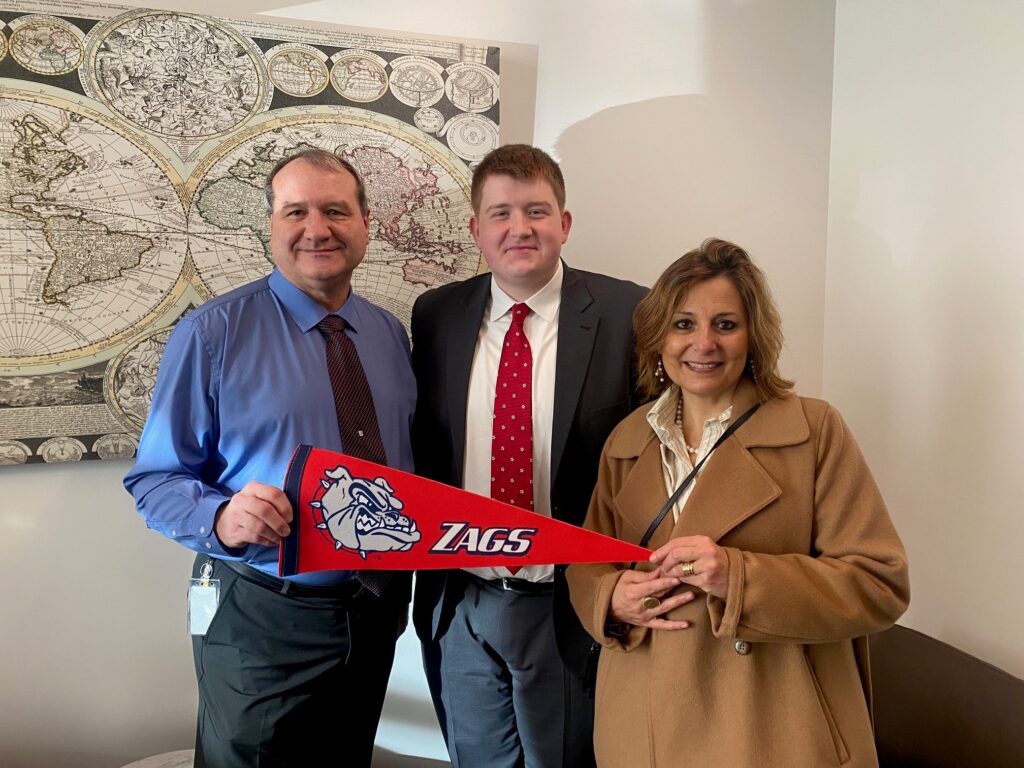
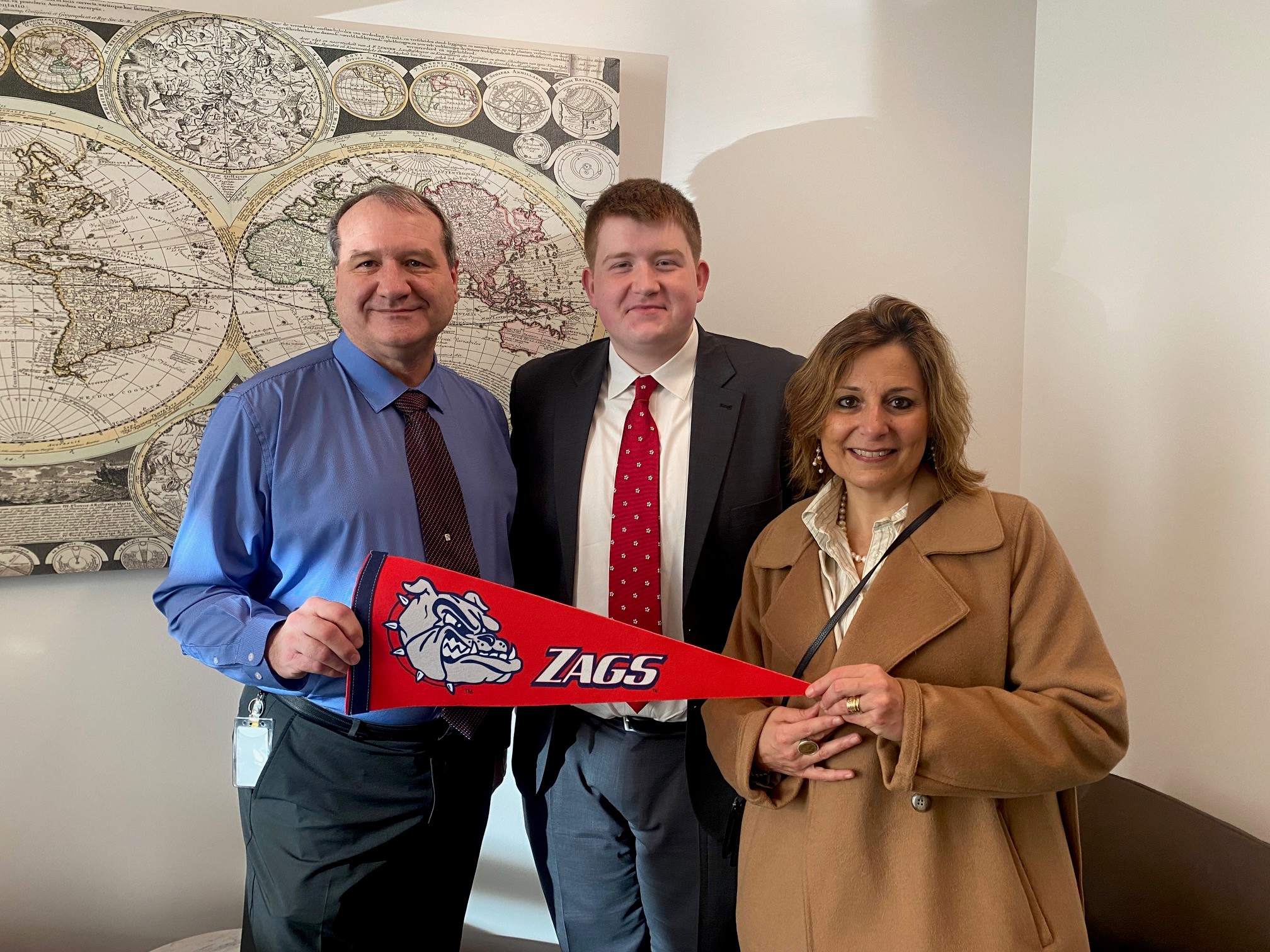
It was my pleasure to meet today with Gonzaga University President Katia Passerini at my office in Olympia. Joining us was student Jack Kashork.
Doing my duty for veterans
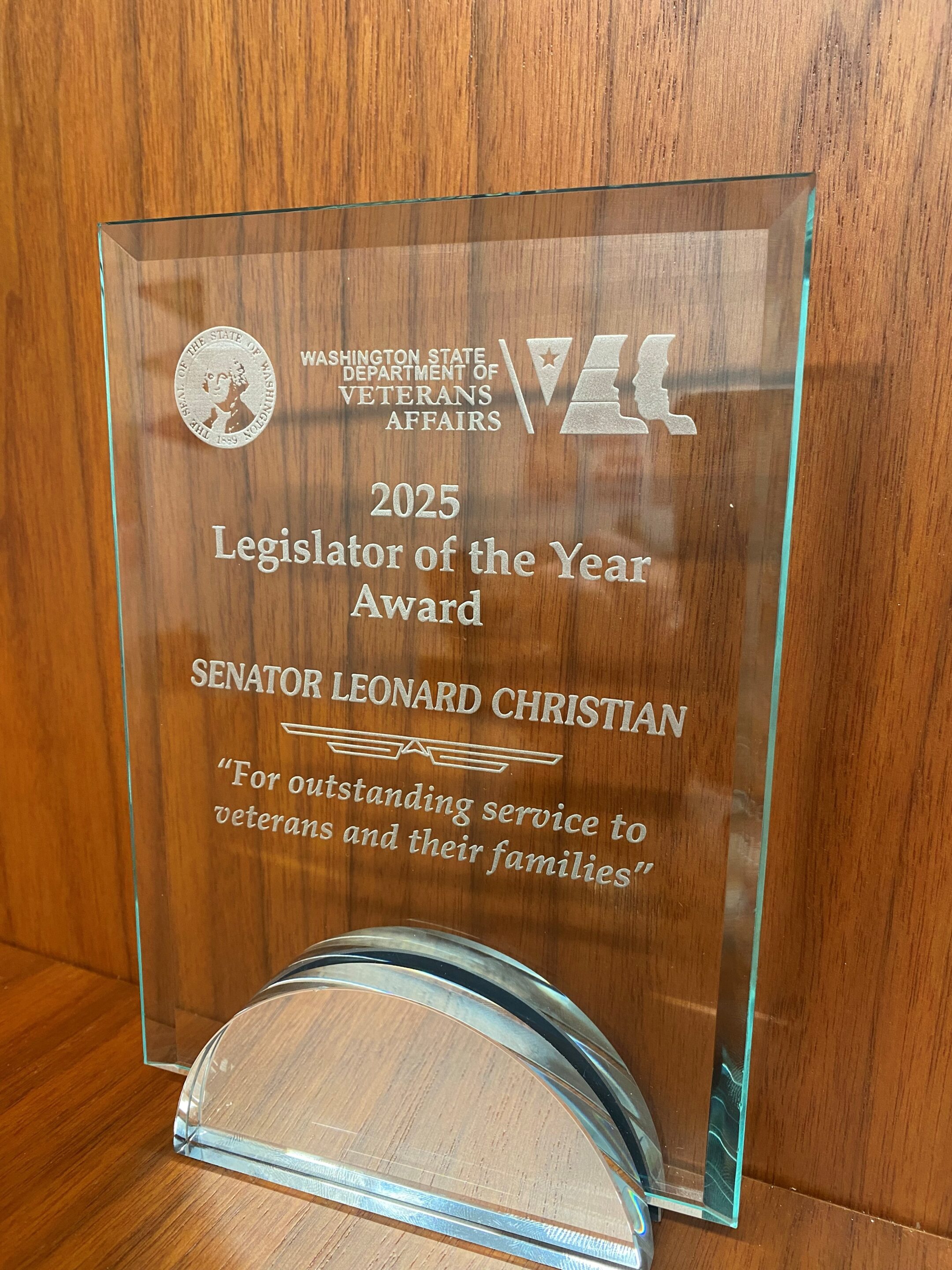
I am surprised and delighted to learn I am one of the recipients of the 2025 Legislator of the Year Award from the Washington Department of Veterans Affairs and the Governor’s Veterans Advisory Committee. This award is presented each year to state lawmakers who make significant contributions to the welfare of veterans. I served 20 years in the Air Force, and now I can say I have done my duty in uniform as well as on the Senate floor.
Bill boosts school construction at Fairchild AFB, Medical Lake
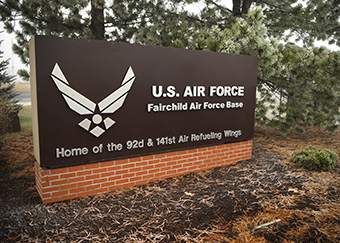 For years, school districts that operate schools on military bases have been penalized by the way Washington state doles out construction money. I’m trying to fix that with a bill that puts them on an even footing with every other school district in our state. Senate Bill 5901, which passed the Senate Early Learning and K-12 Education Committee Thursday, would exclude schools on military bases from school construction funding calculations.
This problem affects two school districts in our state, including Medical Lake, which operates Michael Anderson Elementary School at Fairchild. Schools on military bases are funded by the feds, attendance is limited to military families, and they often are bigger than needed, to accommodate fluctuating base populations and to serve other purposes. Yet the state counts that excess capacity against the district when it comes time to dole out construction money.
At present, the district wants to modernize Medical Lake High School and Hallett Elementary in Medical Lake, but it is ineligible for state funding because the base school has room for 200 more students. This isn’t fair to the people of Medical Lake, who are forced to pay more than their fair share of school construction projects. It’s about time we do something about it. Next stop for this bill is the Senate Ways and Means Committee, and I hope we are able to pass it into law this year.
Thanks for reading,
Leonard Christian
4th Legislative District
Contact me!
 If you have a comment about state government, or a concern with a state agency, I hope you will reach out to my office. My most important duty is to serve you.
Mailing address: Post Office Box 40404, Olympia, WA 98504
Email: Leonard.Christian@leg.wa.gov
Phone: (360) 786-7606
Leave a message on the Legislative Hotline: 1 (800) 562-6000